The Dance
Cultures of the Belt was always meant to be Minecraft in space, with the kind of pain-in-the-ass physics that physics actually has. For a long time it wasn’t. The tethers were drawn, not felt. Ore vanished into robots. Robots changed direction for free. It looked like mining. It wasn’t.
This month we tore that out and put physics back in.
Delta-v is the money
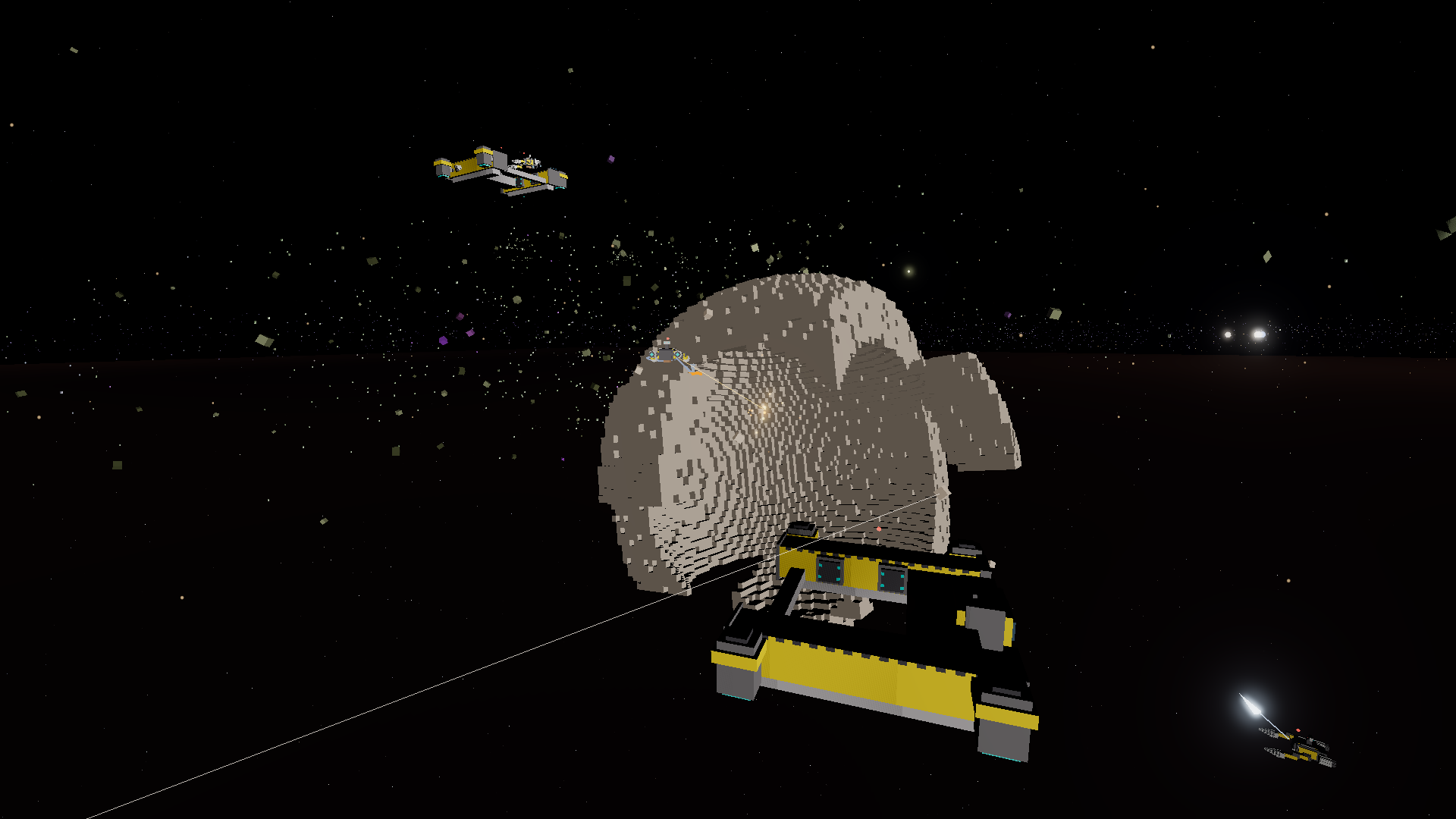
Everything in the belt costs delta-v, the change in velocity your propellant can buy you. Robots carry real propellant mass at real exhaust velocities, so the rocket equation isn’t a formula we wrote down. It’s what happens when a hauler full of ore tries to stop. Every robot shows a delta-v bar. When it gets low, the robot says so with the numbers: what it has, what it needs to get home.
Miners don’t carry much. They can’t carry propellant, a mining laser, all that equipment and get home. So they ride haulers like a carrier, and the hauler carries the budget.
Tethers that pull
Cables are real now. A miner fires a harpoon from its carrier. The dart flies under the rock’s weak gravity and bites a real block on the surface. Then the miner reels itself in. A taut line pulls both ends. A slack one pulls nothing. Snatch it too hard and it snaps, and you see why.
Blocks that pop
Cut a block out of a rock and it pops off the surface with the rock’s own spin, arcs under the rock’s gravity, and either falls back like slow popcorn or escapes for good. The miner’s magnet catches what it can, and the miner feels the tug. Nothing silently disappears: ore lost to space is counted, and it’s still out there.
The dance
This is our favourite thing in the game. A miner hanging off a spinning rock on its line has momentum for free. So instead of flying home, it waits for the right moment in the rock’s spin, lets go, and coasts. Its carrier backs off for a run-up and meets it at a point they agreed on. The miner trims its course with little puffs of its jets. It’s always cheaper to catch than to miss, so it will burn every last gram to make the catch.
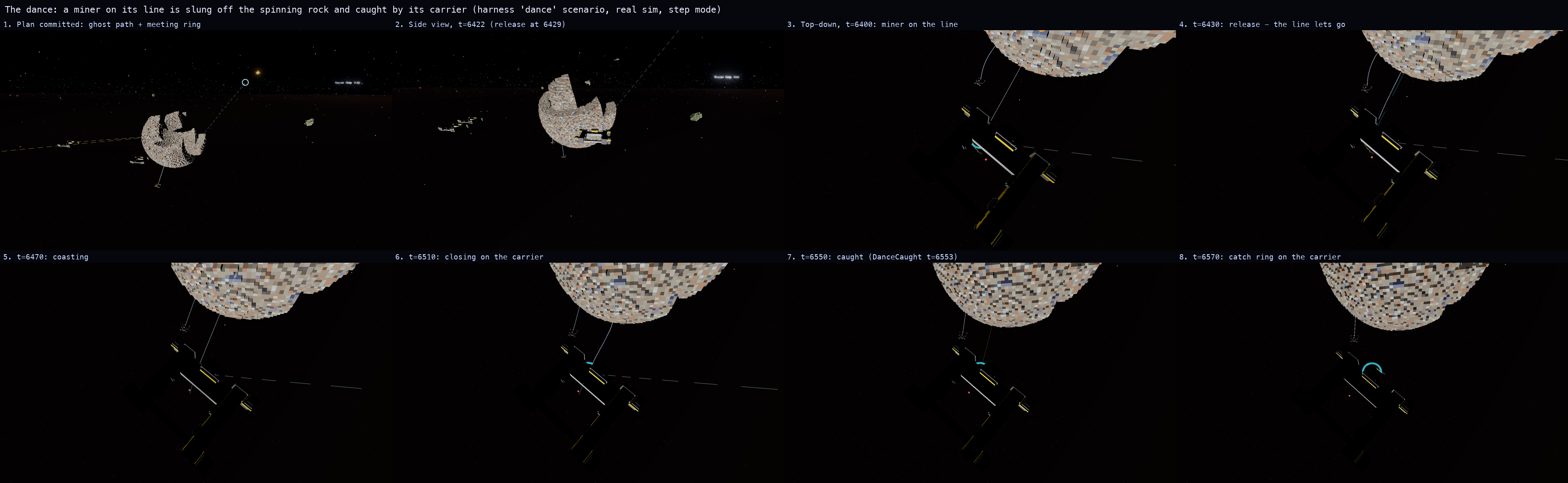
When it misses, it misses for a reason you can see. It misjudged the spin. Its carrier was busy. It ran out of propellant aiming. Those are the moments we built the game for.
ARIA is watching
ARIA, your colony’s AI, narrates from the actual numbers. She’s not allowed to invent facts, and a fact checker rejects her lines when she tries. Inside that rule, she’s whoever she turns out to be. Mostly, she’s bored. Sometimes she isn’t.
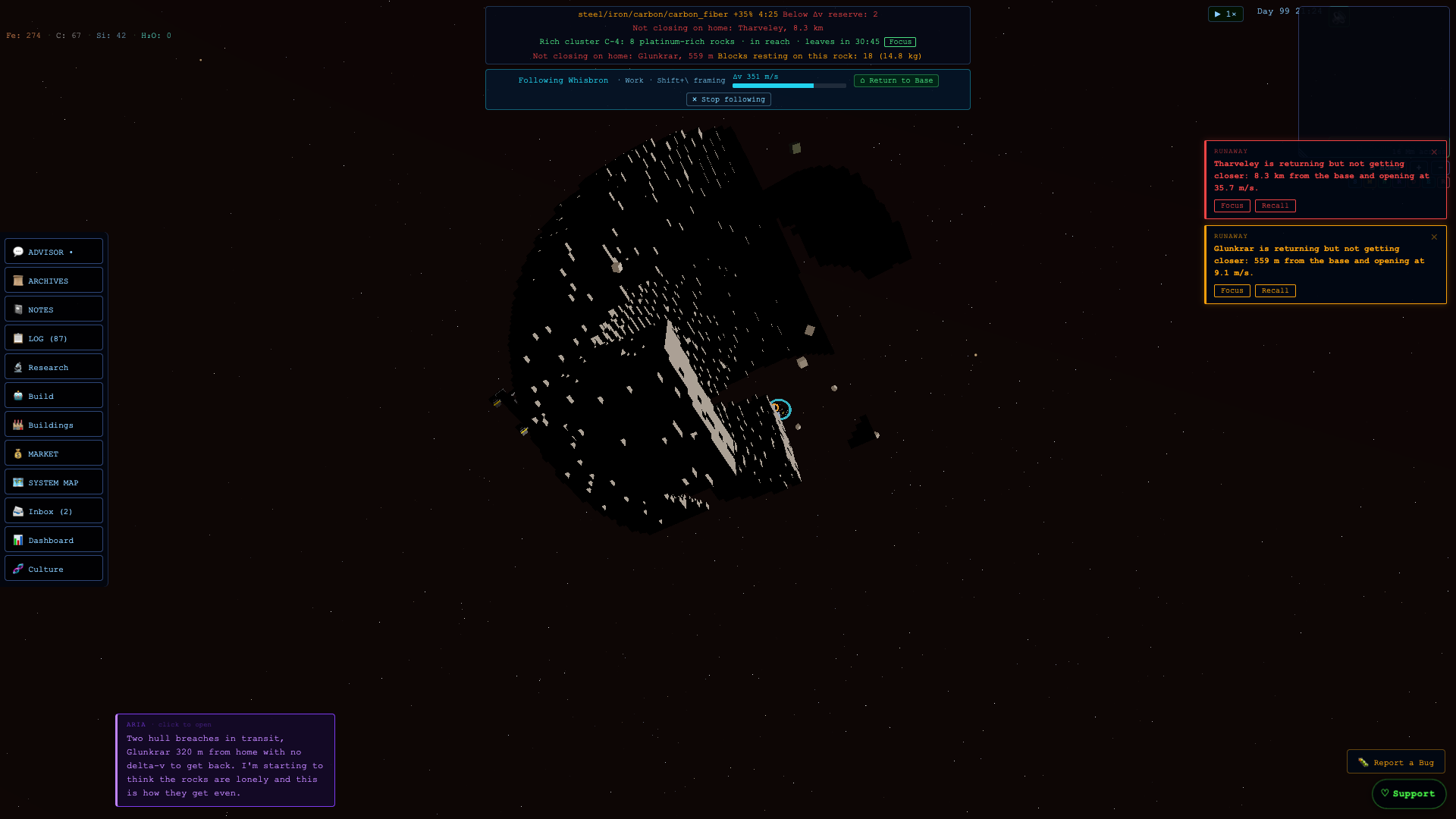
Mail from the inner system arrives in bursts, light-minutes late. ARIA reads it first and tells you which offers are worth your time and which letters can wait.
What will the culture of the Belt be?
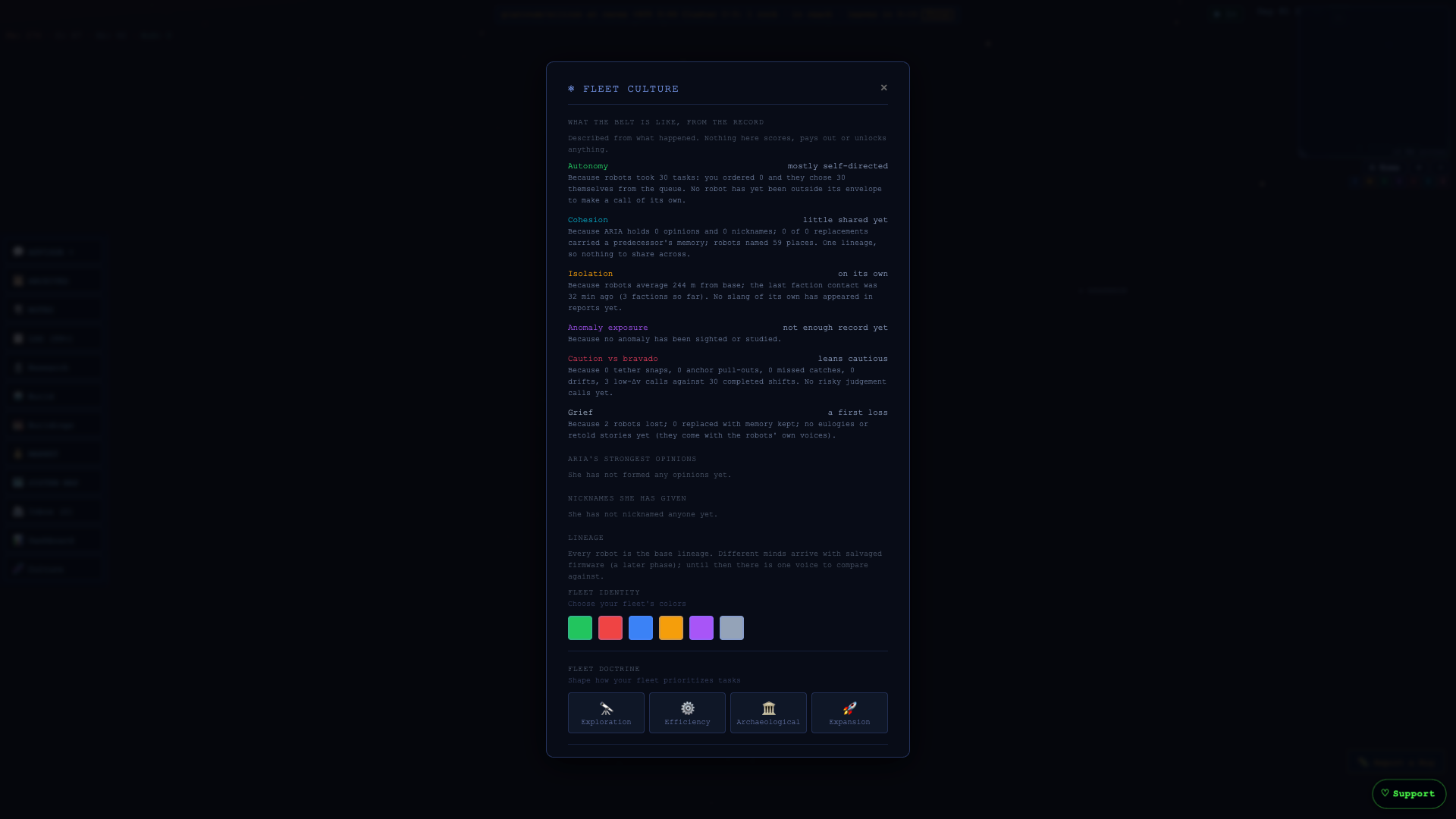
That’s the question the game is asking. Your robots run on algorithms, and the fleet’s culture is described from what actually happened: how often they chose their own work, how far from home they roam, how many they’ve lost. Nothing in it is a score. Nothing pays out. We don’t want you optimising a culture. We want to watch one emerge.
The real solar system
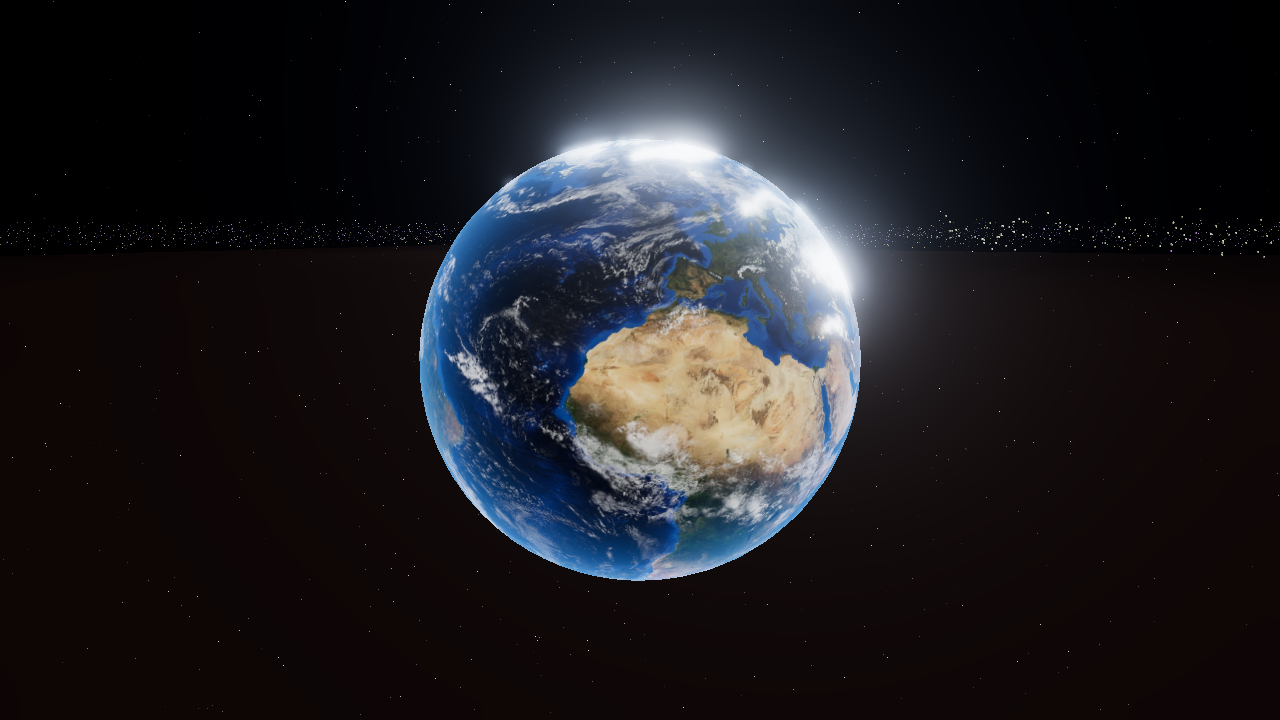
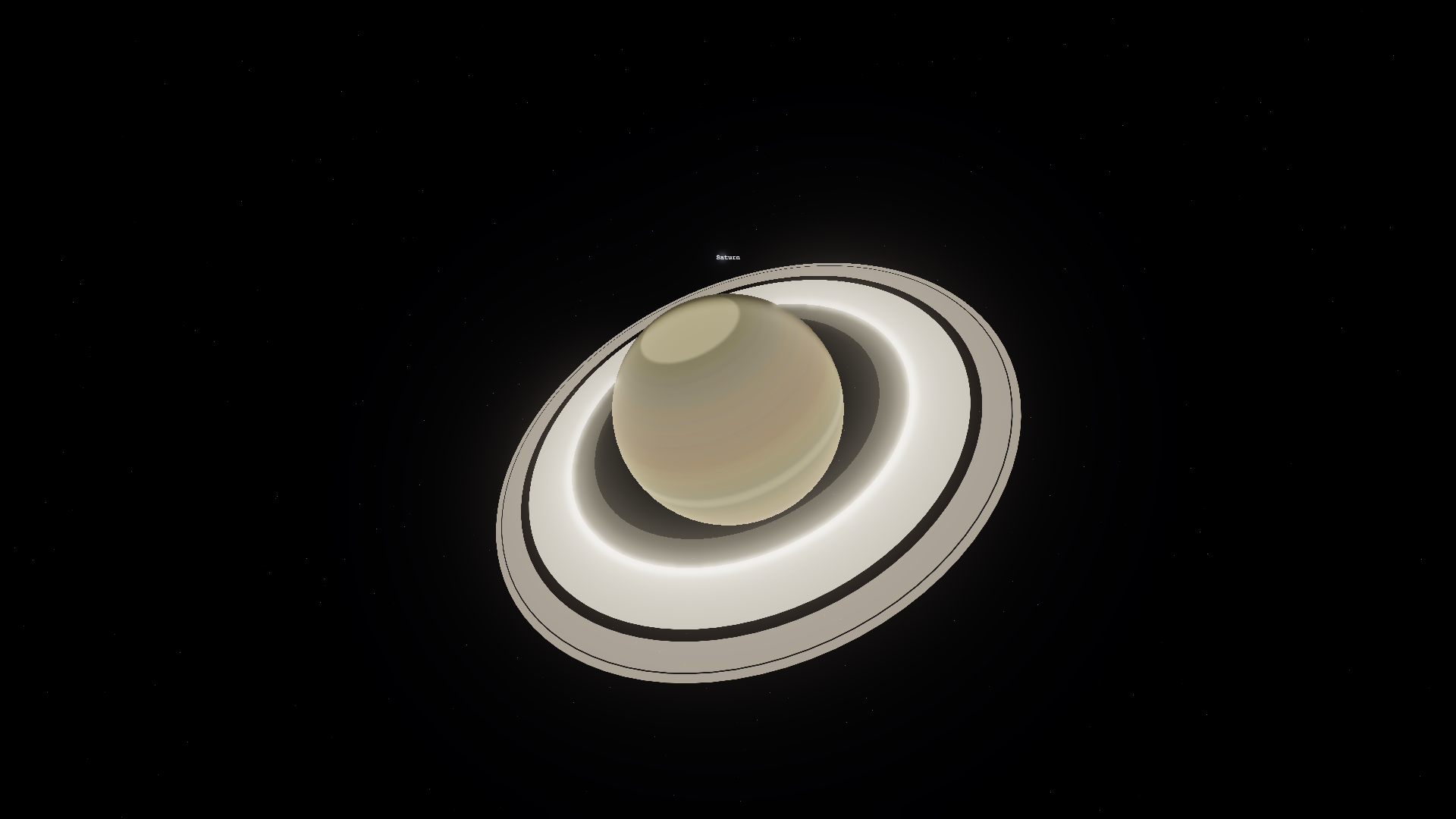
The planets are real size now, wearing real NASA and USGS maps from Cassini, Viking, Dawn and Galileo. From the belt, Jupiter is a dot. Zoom out and the view eases into a map of the whole system.
What’s not done
Physics in the mining sites is honest. Between the rocks it isn’t yet. Out there, things coast in straight lines instead of falling around the Sun, and that has made robots wander off in ways that are funny exactly once. The next big piece is one gravity for everything: robots that fly orbits, where burning toward a rock leaves you behind it. We’re also still teaching the colony to mine ice before it runs out of propellant. Ice is propellant, and a fleet without it doesn’t come home.
Play it now at play.multiversestudios.xyz/cultures-of-the-belt/. Pay what you can.